
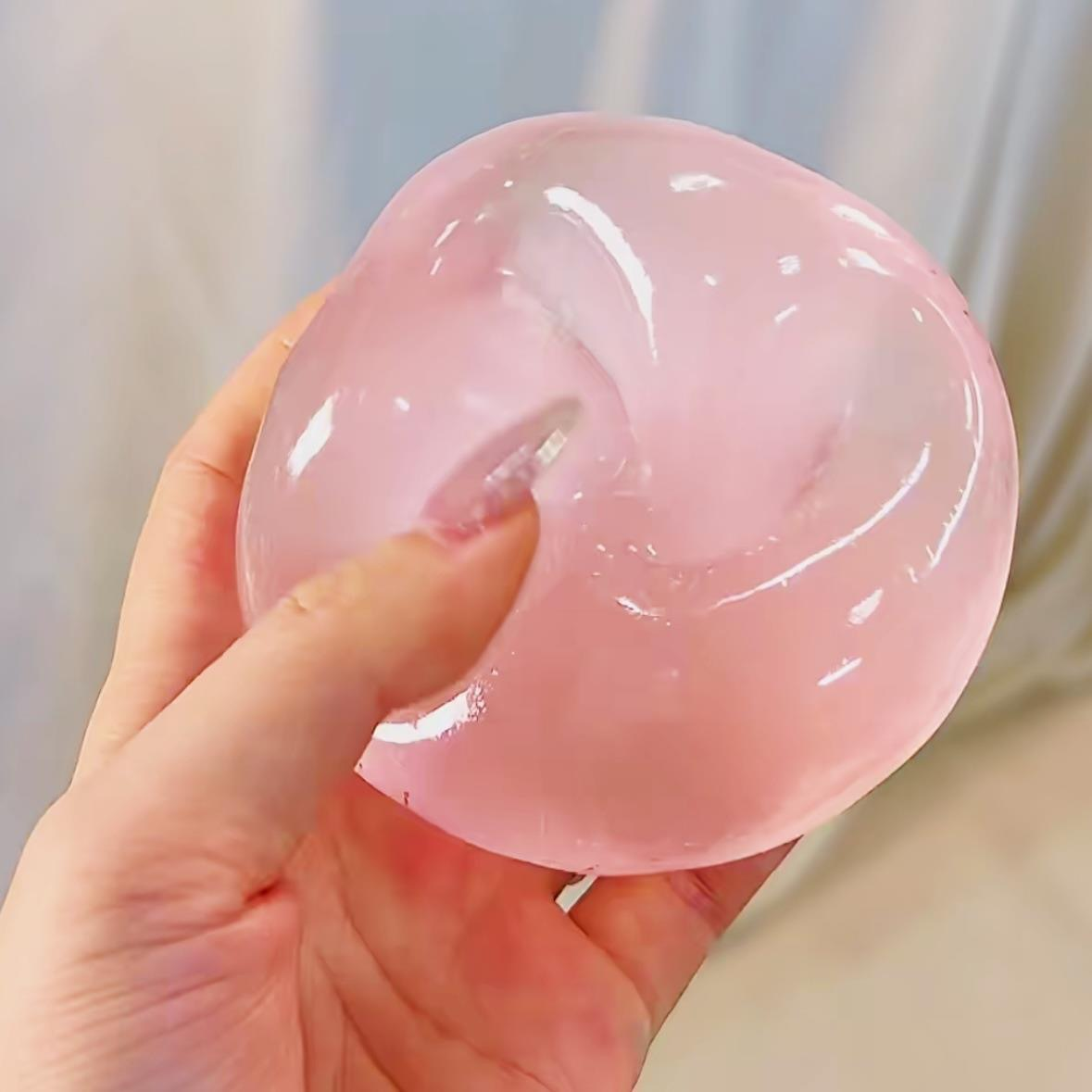
Clear payment terms protect both sides. Here is how SUKEAUTO works on every order.
Paying for Samples
Stock samples are free; you pay the courier fee — typically USD 40–50 — by PayPal. PayPal is used for sample courier fees only, never for orders. Custom samples carry a sample fee, quoted on its own line.
Deposit and Balance on Bulk Orders
- Bank transfer (T/T) only for orders.
- 50% deposit to start, 50% balance before shipment.
- Payment goes only to our company account in the beneficiary name shown on the proforma invoice. Our bank details are sent by us directly when you’re ready to pay — never published on a website. If you ever receive different bank details that appear to come from us, pay nothing and call us to confirm.
Reading the Proforma Invoice
The proforma invoice lists items, quantities, unit prices, packaging, tooling or sample lines if any, the trade term (EXW, FOB or DDP), the deposit and balance, and the beneficiary. Check every line before paying the deposit.
When Production Starts
Production starts when the deposit clears. Raw materials for squishies are bought on cash terms and their prices have been rising, so the deposit is what locks your material and production slot at the agreed price.
Building Trust on a First Order
- 100% pre-shipment inspection on every order.
- Before the balance: a video of your actual goods — cartons opened, several random pieces squeezed and stretched — plus photos of product, packaging and cartons.
- You may appoint a third-party inspector at your cost.
- Factory visits or a live video tour are welcome.
What Buyers Ask SUKEAUTO About Payment
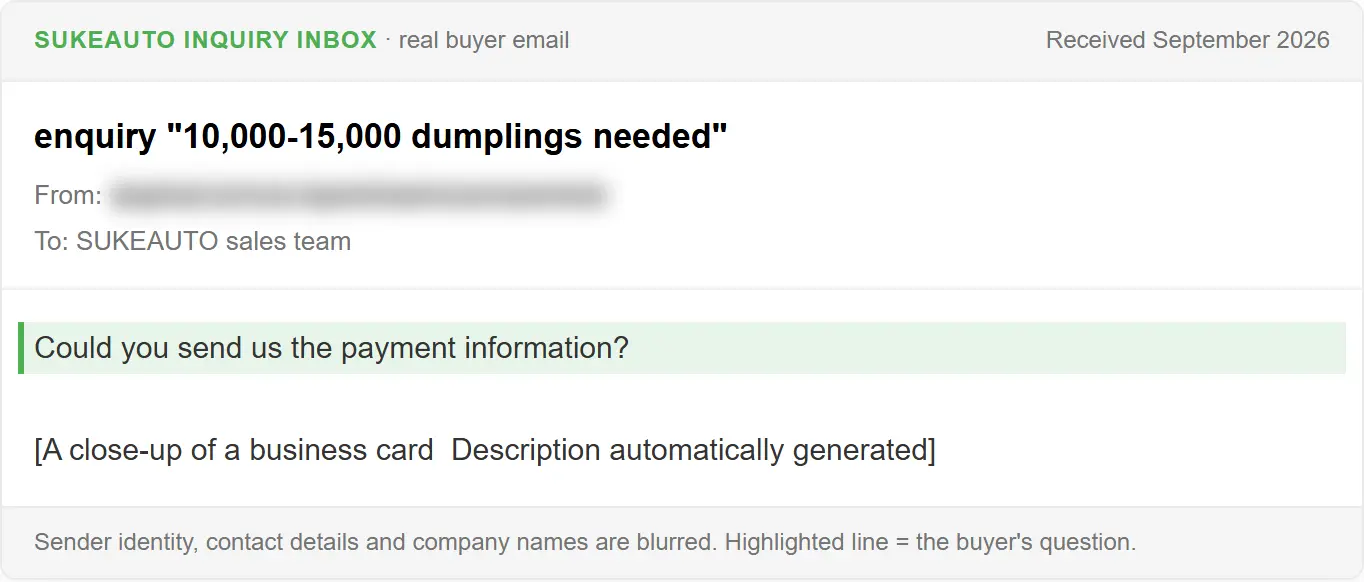
Payment questions come late in a project, usually once the quote is agreed: 16 of the 408 squishy buyers who wrote to SUKEAUTO between July and October 2026 asked about payment terms — how to pay, how to confirm receipt, and how a first order can be structured.
Why Payment Fraud Targets Importers
Business email compromise is one of the costliest forms of fraud. The FBI’s Internet Crime Complaint Center reported about 2.77 billion US dollars in losses from business email compromise in 2024. The pattern in trade is well known: a criminal gains access to, or imitates, a supplier’s email and sends “updated” bank details just before a payment is due. In one case reported by China’s export credit insurer, a long-standing buyer paid a six-figure invoice to a fraudster’s account after receiving a convincing “change of bank account” email.
How to Protect Every Payment
- Only pay to the account on the proforma invoice you received in the original thread.
- Treat any change of bank details as suspicious, however urgent the email sounds.
- Confirm by phone or video using a number you already have — not one in the new email.
- Check the sender address character by character; look-alike domains differ by one letter.
- Send a remittance copy after paying so the supplier can trace the transfer quickly.
- Call your bank at once if you suspect fraud; recall requests work best within hours.
SUKEAUTO never changes its bank details by email. If you ever receive different details that appear to come from us, pay nothing and contact us through a channel you already know.
Common Trade Payment Methods Compared
| Method | How it works | Typical use |
|---|---|---|
| T/T deposit + balance | Bank transfer: deposit to start, balance before shipment | Most factory orders |
| Letter of credit | The buyer’s bank undertakes to pay against compliant documents | Large orders, new relationships |
| Open account | Payment after delivery on agreed terms | Established, insured relationships |
SUKEAUTO works on T/T: 50% deposit and 50% balance before shipment.
What You See Before Paying the Balance
Before the balance is due, SUKEAUTO sends a video of your actual goods — cartons opened, random pieces squeezed and stretched — and photos of the product, packaging and outer cartons. You pay the balance knowing what is in the cartons.
More Payment Questions
Can I pay by credit card or PayPal for an order? No — bank transfer only for orders; PayPal is used only for sample courier fees.
Can the deposit be lower for a first order? SUKEAUTO’s terms are 50% deposit and 50% before shipment on every order.
When is my order confirmed? When the deposit clears; that locks your material and production slot.
Can I appoint my own inspector before paying the balance? Yes, at your cost; tell SUKEAUTO the date and we arrange access.
Which currency do you invoice in? US dollars, as shown on the proforma invoice.
What if a bank charge reduces the amount received? Ask your bank to send the full invoice amount with charges paid by the sender.
How Payment Methods Compare on Risk
Trade payment methods sit on a scale. At one end the buyer carries the risk; at the other the seller does. A simplified view, from the buyer’s side:
| Method | Buyer’s risk | Seller’s risk | Typical use |
|---|---|---|---|
| 100% in advance by bank transfer | High | None | Samples, very small orders |
| Deposit before production, balance before shipment | Shared | Shared | The most common route for factory orders |
| Balance against a copy of the bill of lading | Lower | Higher | Established buyers with a track record |
| Letter of credit | Low, if the documents are right | Low, if the documents are right | Large first orders, institutional buyers |
| Open account (pay after delivery) | Very low | Very high | Long-standing relationships only |
SUKEAUTO works with bank transfer only: a 50% deposit when you confirm the proforma invoice and the 50% balance before shipment, after a 100% pre-shipment inspection and photos and video of your actual goods. That keeps the risk shared and gives you a clear point to check the goods before the second payment.
Why the Balance Comes Before Shipment
Once goods are loaded and the bill of lading is released, the seller has very little left to protect an unpaid balance, especially in countries where cargo can be collected against a copy of the documents. Paying the balance after inspection and before shipment means the buyer sees the finished goods and the seller still holds them. It is the point where both sides have the most information and the least exposure.
Bank Transfer Details That Cause Delays
International transfers go through one or more intermediary banks, and each can deduct a fee. A few details avoid most problems:
- Charges option. Transfers sent with shared charges arrive slightly short; if the invoice must be paid in full, ask your bank about sending with all charges paid by the sender.
- Currency. The proforma invoice states the currency. Paying in another currency triggers a conversion and a different amount.
- Reference. Put the proforma invoice number in the payment reference so the deposit can be matched the same day.
- Proof. Send the bank’s transfer confirmation. Production is scheduled when the deposit is received, not when it is sent.
Account-Change Fraud: How It Works
The most damaging payment fraud in trade does not involve a fake supplier at all. It is business email compromise, where a criminal reads the real conversation between buyer and supplier and steps in at the moment of payment.
Typical pattern:
- The criminal gains access to a mailbox on either side, or registers a look-alike address that differs by one letter.
- They read the conversation quietly for weeks, learning order numbers, amounts and dates.
- Just before a payment is due, they send a message that quotes the real order and adds one line: the bank account has changed because of an audit or a new bank.
- The buyer pays the new account and the money is gone within hours.
A case published by Chinese police describes a long-standing trading relationship in which a look-alike address, one letter different from the real one, redirected close to one million yuan of payments over a month before the companies compared records. Trade-credit insurers report similar losses of tens or hundreds of thousands of dollars per case.
How to Protect a Payment
- Treat any change of bank details as fraud until proven otherwise. Call the supplier on a number you already have, from an earlier invoice or the company website, never one given in the email asking for the change.
- Read the full email address, not just the display name.
- Check that the beneficiary matches the company you contract with. A personal account, or a company with a similar but different name, is a stop sign.
- If you have paid a wrong account, act within hours. Ask your bank to recall the payment immediately, report it to the police, and keep the original emails with their full headers.
SUKEAUTO’s bank details appear on the proforma invoice for your order, always in the company’s name, and are never changed by email. If you ever receive a message claiming that SUKEAUTO’s account has changed, do not pay; call us first.
What a Proforma Invoice Should Lock
The proforma invoice is the working contract for a factory order. Before you pay the deposit, check that it states:
- Both companies’ names and addresses, the PI number, the date and the validity.
- Each item’s number, description, material, colour, quantity and unit.
- Unit price, total, currency and the trade term with the named place, such as EXW or DDP to your address.
- The payment split and when each part is due.
- The lead time and what starts it, such as receipt of the deposit or sample approval.
- Packaging, labels and carton marks.
- The inspection and the approved sample the goods are checked against.
- The beneficiary bank details, in the contracting company’s name.
Key Terms
- Proforma invoice (PI) — the seller’s formal offer, which the buyer confirms before paying the deposit.
- Beneficiary — the account holder who receives the payment; it should match the contracting company.
- Intermediary bank — a bank that passes an international transfer between the sending and receiving banks.
- Business email compromise (BEC) — fraud in which criminals use a real or look-alike mailbox to redirect payments.
Does SUKEAUTO accept card payments for orders? No. SUKEAUTO takes order payments by bank transfer only; PayPal is used for sample courier fees.
When does production start? SUKEAUTO schedules production when the deposit arrives in our account.
Can I pay the balance after the goods arrive? No. SUKEAUTO’s balance is due before shipment, after inspection and photos and video of your goods.
Sources: SUKEAUTO inquiry inbox — 408 squishy buyers by email and WhatsApp, July–October 2026 · FBI Internet Crime Complaint Center (IC3) · ICC: Incoterms® 2020.
A Payment Timeline for a Typical Order
- Quote agreed — SUKEAUTO issues a proforma invoice with every line, the trade term and the beneficiary account.
- Deposit — 50% by bank transfer; send the remittance copy.
- Deposit cleared — production slot and materials locked; the timeline starts.
- Production and inspection — 100% inspection before packing.
- Video and photos — sent to you before the balance is due.
- Balance — 50% by bank transfer before shipment.
- Shipment — documents and tracking sent once the goods leave.
Red Flags in Any Supplier Payment Request
- New bank details, especially a personal account or a different country.
- Pressure to pay “today” to avoid a delay.
- A sender address that differs by one letter from the usual one.
- A request to keep the change confidential.
- Instructions to pay a third party.
Will SUKEAUTO ever ask me to pay a different account? No. SUKEAUTO’s beneficiary is the one on the proforma invoice, and any question about it should be confirmed by a phone or video call you start yourself.
Does SUKEAUTO send a receipt for payments? Yes — SUKEAUTO confirms receipt of every deposit and balance in writing.
Key Terms
- T/T — telegraphic transfer, a bank-to-bank international payment.
- Proforma invoice — the document listing the agreed order, terms and beneficiary account.
- Deposit and balance — the two payments on a 50/50 order: one to start, one before shipment.
- Remittance copy — the bank’s confirmation of your transfer, used to trace payments.
- Business email compromise — fraud in which criminals imitate or take over a supplier’s email to redirect payments.
- Letter of credit — a bank’s undertaking to pay against documents that meet agreed terms.
- Beneficiary — the company named to receive the payment; it should match the supplier on the contract.
The Short Version
Pay by bank transfer only to the beneficiary on the proforma invoice, treat any change of bank details as fraud until you have confirmed it by phone or video, and keep remittance copies. With SUKEAUTO, 50% starts production, you see a video of your goods before the balance, and the balance releases the shipment. If anything about a payment request looks different from usual — a new account, an urgent tone, an unfamiliar sender address — stop and confirm before sending money. Most payment fraud succeeds because a buyer paid quickly to avoid a delay; a one-day pause to confirm costs far less than a lost transfer, and a genuine supplier will always wait for you to check. SUKEAUTO would always rather you call first than pay the wrong account, even if it delays the shipment by a day. Your money and your trust matter more than a day.
Related: how to work with us · EXW, FOB or DDP? · back to custom squishy toy manufacturer.
Send Your Inquiry
Tell us the style, quantity, logo or packaging you need and your target date — we reply with the right route and a price range.
Leave A Comment