
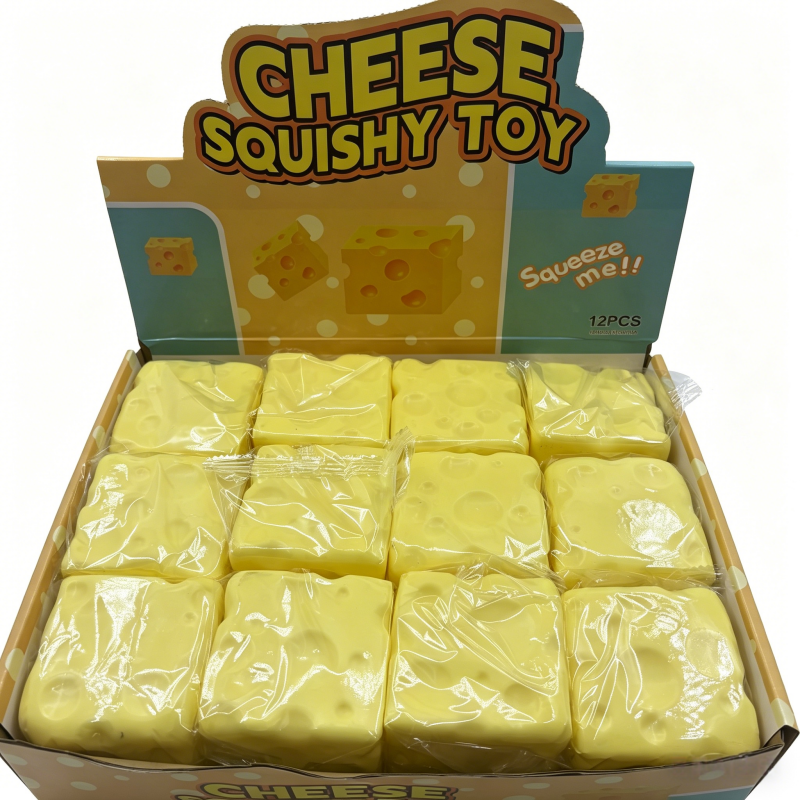
The US and Canada are our largest squishy markets: 82 of the buyers who contacted SUKEAUTO since July 2026 were in North America. Both countries regulate squishies sold for children as toys. Here is what applies.
CPSIA and ASTM F963: What Gets Tested
In the US, children’s toys must comply with ASTM F963-23, mandatory since 20 April 2024 (16 CFR part 1250), and with the CPSIA limits on lead and phthalates. For a squishy, that means mechanical and physical tests (small parts, sharp edges, seams and attachments under force), heavy elements in surface coatings, total lead in the substrate, and restricted phthalates. Testing must be done by a CPSC-accepted third-party laboratory.
Our TPR squishies hold an ASTM F963-23 / CPSIA test report from MTL (October 2024) — lead, phthalates and mechanical tests all passed.
Who Issues the CPC
The Children’s Product Certificate is issued by the importer or domestic manufacturer, based on third-party test results. For our TPR squishy line we hold a CPC, available to buyers on request. For your own new design, testing is arranged per order and the CPC is based on that design’s results.
eFiling at Import
Since 8 July 2026, certificate data for regulated imports, including children’s products, must be filed electronically with CBP at entry. Have the certificate data ready before the goods ship; your customs broker files it.
Tracking Labels and Warnings
Children’s products need permanent tracking information on the product and packaging — manufacturer, production location and date, and batch — plus any required cautionary statements, such as small-parts warnings for items intended for young children.
Canada: CCPSA Basics
In Canada, toys fall under the Canada Consumer Product Safety Act and the Toys Regulations (SOR/2011-17); “soft toys” include those made of pliable plastic or rubber. Required warnings must appear in both English and French. Testing for Canada is arranged per order; bilingual text comes from you.
Documents Marketplaces Ask For
Expect requests for the CPC, the third-party test report and product photos. California Prop 65: we do not hold a Prop 65 report; testing can be arranged per order.
Testing Cost and Time
Testing is arranged per product and order; third-party lab fees are not included in our unit price. We provide production-grade samples for submission.
What US and Canadian Buyers Ask SUKEAUTO
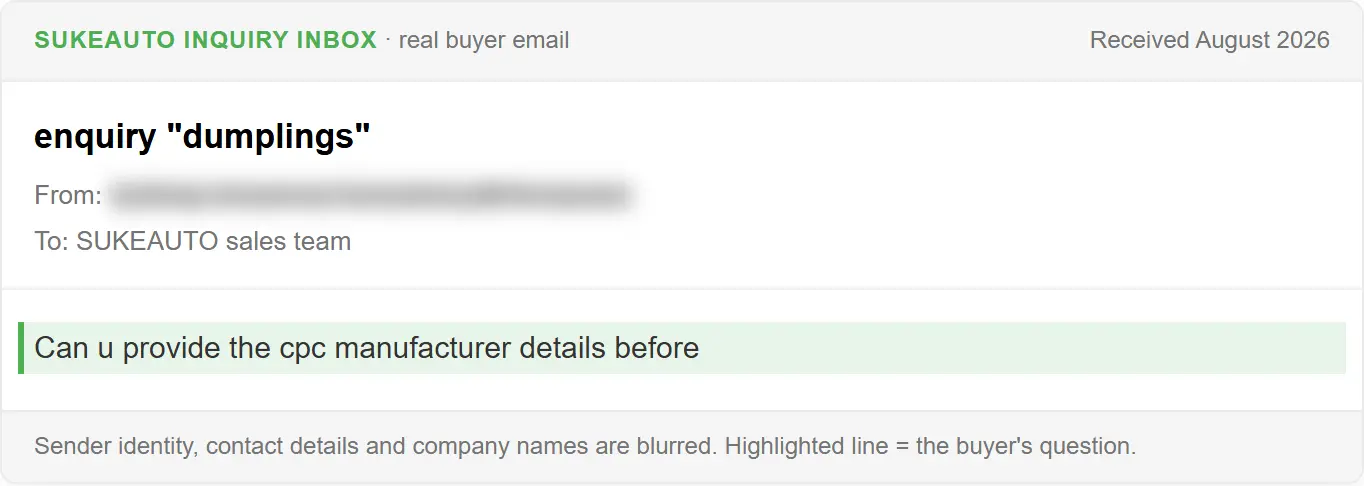
North American buyers usually ask about compliance early, often in the first or second message. Many ask for the manufacturer details for their Children’s Product Certificate, which test reports apply to the product, and whether the product will clear US customs without delay.
What the CPC Must Contain
A Children’s Product Certificate is issued by the importer or domestic manufacturer and must identify: the product; each applicable rule, such as ASTM F963-23 and the CPSIA lead and phthalate limits; the importer or manufacturer issuing it; the contact person for test records; the date and place of manufacture; the date and place of testing; and the CPSC-accepted laboratory that tested the product. SUKEAUTO supplies the manufacturing details and the third-party test report for its TPR squishy line.
eFiling: The Seven Data Elements
Since 8 July 2026, certificate data for children’s products must be filed electronically with US Customs and Border Protection at entry, with no exemption for samples, low-value or small shipments (goods entering through foreign-trade zones have until 8 January 2027). The filing covers:
- Product identification, such as a GTIN, UPC or SKU.
- The citation of each applicable CPSC rule.
- The date of manufacture (month and year).
- The place of manufacture — manufacturer name, address and contact.
- The date of the most recent compliance testing.
- The testing laboratory — name, address and contact.
- The person holding the test records.
Your customs broker files the data; SUKEAUTO provides the manufacturing information. Importers can also register products in the CPSC Product Registry and file a reference number instead of the full data for each shipment.
Small Parts, Warnings and Age Grading
Toys for children under 3 must not contain small parts. Toys for ages 3 to 6 that contain small parts carry the choking-hazard warning — a warning triangle, the words WARNING and CHOKING HAZARD — on the principal display panel. Most squishies are graded for ages 3 and up.
Water Beads and Filled Squishies
In 2026 CPSC recalled or warned about several squishy buns containing water beads that expanded beyond the size allowed by the mandatory toy standard. Before you import any filled squishy, get written confirmation of what the filling is and that it contains no expanding water beads.
Canada in Practice
In Canada, toys must meet the Toys Regulations (SOR/2011-17) under the Canada Consumer Product Safety Act; required warnings appear in both English and French. Products with button or coin batteries carry additional bilingual warnings. There is no certificate equivalent to the CPC, but importers are responsible for compliance and should keep the test evidence.
Country-of-Origin Marking
US customs requires imported goods to be marked with their country of origin in English, in a conspicuous, legible and permanent way — for example “Made in China” on the product or its retail packaging.
More US and Canada Questions
Does SUKEAUTO issue the CPC? The importer issues the CPC; SUKEAUTO provides the manufacturing details and the third-party test report.
Is the October 2024 test report still usable? It covers the tested material and construction; a new design, material or decoration is tested on its own.
Do I need a Prop 65 report for California? It depends on your retailer; SUKEAUTO can arrange Prop 65 testing per order.
Can SUKEAUTO add tracking information to the packaging? Yes — send the text and SUKEAUTO prints it with your artwork.
Who files the eFiling data? Your customs broker, using the certificate data from you as the importer.
Are the rules different for adult stress toys? Products clearly designed and marketed for adults are not children’s products, but squishies appeal to children, so most importers certify them as toys.
eFiling Is Now in Force
On 8 July 2026 the US Consumer Product Safety Commission announced that its eFiling program was in effect. Importers of regulated consumer products, children’s toys included, must now submit their certificate of compliance data electronically before the products enter US commerce. For squishy importers this changes the timing of compliance work:
- The certificate must exist before the goods ship, not after they arrive.
- The testing behind it must be complete, from an accepted laboratory, before the entry is filed.
- The data must match the shipment: the product, the factory, the production date and the tests.
- Mistakes now show up at the border, where they delay entry, rather than months later in an audit.
Plan the certificate as part of the order, at the same time as the packaging artwork, not as paperwork after shipment.
The Water Bead Standard
US toy safety rules include a specific section on water beads, 16 CFR 1250.4. It applies to water bead toys and to toys containing water beads, and sets requirements for the size of beads after they expand and for labelling. Squishies filled with water beads have been recalled and warned about by the CPSC. For a squishy range aimed at children, the simplest compliance strategy is a filling without water beads.
What US Regulators Are Seeing in Squishies
The CPSC’s August 2026 warning on fake and non-compliant squishies reported 55 shipments stopped at US ports, 355,683 units in total, and notices of violation sent to importers and sellers. It listed the problems found: toys that tear and release small parts or filling, excess lead or prohibited phthalates, water bead violations, missing warnings, age grading, tracking information or manufacturer identification, and products sold without the testing and certification required for children’s products. Each item on that list is something a certificate and a proper test programme are meant to prevent.
Why a Certificate Gets Rejected
Common reasons a Children’s Product Certificate does not hold up:
- The laboratory is not accepted by the CPSC for the tests listed.
- The tests are for a different product, colour or material than the one shipped.
- The standard version is out of date. Since 2024, ASTM F963-23 is the mandatory toy standard.
- Information is missing, such as the importer’s details, the records custodian, or the date and place of manufacture.
- The tracking label does not match the production information on the certificate.
Key Terms
- eFiling — electronic submission of certificate data to the CPSC at import.
- Certificate of compliance / CPC — the importer’s or manufacturer’s certificate that a product meets applicable rules.
- Records custodian — the person who keeps the test records behind a certificate.
- Notice of violation — a CPSC letter telling a company its product does not comply.
Who issues the CPC for my order? The US importer or domestic manufacturer issues it; SUKEAUTO supplies the test reports and production details it is based on.
Does SUKEAUTO’s DDP service handle eFiling? Under DDP, SUKEAUTO’s import partner handles the entry; the certificate data still has to be ready before shipment.
Do squishies need a tracking label? Yes. Children’s products need permanent tracking information; send SUKEAUTO your details and it is printed on the pack.
Sources: SUKEAUTO inquiry inbox — 408 squishy buyers by email and WhatsApp, July–October 2026 · CPSC: Toy Safety business guidance · ASTM F963-23 incorporated as the mandatory toy standard (Federal Register) · CPSC certificates of compliance and eFiling rule (Federal Register) · CPSC: tracking labels · Canada Toys Regulations SOR/2011-17 · CPSC recall notice: squishy buns with water beads · CPSC: mandatory eFiling for certificates (July 2026) · eCFR: 16 CFR Part 1250, water beads · CPSC: accepted testing laboratories.
Common Reasons Shipments Are Delayed at US Entry
- Certificate data missing, or not matching the shipment.
- The product, carton marks and invoice describing the item differently.
- Country of origin missing on the product or retail packaging.
- A test report that does not cover the material or construction shipped.
- A product listed for young children while the packaging shows an older age grade, or the other way round.
Does SUKEAUTO mark cartons and products with the country of origin? Yes — SUKEAUTO marks “Made in China” on the product or retail packaging and on the cartons.
Key Terms
- CPSIA — the US Consumer Product Safety Improvement Act, which sets lead and phthalate limits and third-party testing for children’s products.
- ASTM F963-23 — the US toy-safety standard, mandatory for toys under 16 CFR part 1250.
- CPC — Children’s Product Certificate, issued by the importer or domestic manufacturer.
- eFiling — electronic filing of certificate data with US customs at entry, mandatory since 8 July 2026.
- Tracking label — permanent marks on a children’s product and its packaging identifying source, date and batch.
- CCPSA — the Canada Consumer Product Safety Act, under which the Toys Regulations apply.
The Short Version
Test to ASTM F963-23 and the CPSIA limits through a CPSC-accepted lab, issue the CPC as importer, have the seven eFiling data elements ready before the goods ship, and print tracking information, warnings and “Made in China” on the product and pack. For Canada, add bilingual warnings.
Related: squishy safety testing · toy safety certificates · back to custom squishy toy manufacturer.
Send Your Inquiry
Tell us the style, quantity, logo or packaging you need and your target date — we reply with the right route and a price range.
Leave A Comment