
Looking for reliable plush toy manufacturers in China? This guide compares Chinese OEM plush factories for custom plush toys, mascot plush, plush keychains, branded merchandise, and retail-ready programs. I focus on real buyer concerns like MOQ, prototyping, packaging, compliance, and how to tell a true factory partner from a trading company, so you can shortlist suppliers with more confidence.
If I am sourcing plush toys in China, I would not start by asking only, “Who are the top plush toy manufacturers in China?” I would start with a more useful question: which suppliers actually fit my project type? China has deep plush manufacturing capacity, but the supplier pool is mixed. Some companies look like real OEM/ODM factories with prototyping, pattern development, packaging, and export workflow. Others look stronger in plush merchandise, K-pop dolls, mascot items, or mixed soft-goods production. That is why I would not write this as a generic “top 10” list. A buyer guide works better.
Quick comparison: plush toy suppliers in China
| Company | Supplier type | Best for | MOQ signal | Dev depth | Export / compliance | My view |
|---|---|---|---|---|---|---|
| Sukeauto | OEM/ODM plush factory | Custom plush, mascots, branded plush, retail-ready OEM | From 500 pcs | Strong | ICTI, Disney, CE, EN71, ASTM, CPC, RoHS | One of the clearest factory-style partners for custom plush development. |
| Dongguan Nianbeast | Plush-specialist OEM factory | Plush pendants, mascots, souvenir plush, trendy, eco | Not stated | Strong | 3rd-party QC, eco packaging, 33yrs (est.1992) | One of the strongest plush-focused names for concept-to-delivery. |
| Shenzhen Hengsheng | Custom plush + mixed merch | Wholesalers, authors, studios, non-profits | Not stated | Medium | EN71, ASTM F963, CPSIA, ISO8124 on product pages | Useful shortlist candidate, verify scale & workflow. |
| Shenzhen Jiaoyang | Export-oriented plush producer | Disney-style soft toys, baby plush, pet plush | Not stated | Medium/strong | ISO9001, Disney audit claim, 20+ years | Stronger for buyers valuing export & retail signals. |
| Yortoob | Yangzhou OEM/ODM plush | Lower-MOQ custom plush, gifts, IP merch, pet | From 200 pcs | Med/strong | 13+ years, 12k+ sqm, 200+ employees, one-stop | Good for flexibility & merchandise-oriented programs. |
| JianChuang | Premium custom plush mfr | Mascots, cotton dolls, anime plush, premium | From 300 pcs | Strong | ISO 9001:2015, safety-compliant | Fit when design fidelity matters more than lowest price. |
| Shenzhen Mange | Plush merchandise specialist | K-pop plush, keychains, dolls, accessories | Not stated | Medium | EN71, ASTM, CPSC, ICTI, ISO, BSCI claims | Better for fan merchandise & accessory-heavy plush. |
| Miyan Toys | OEM plush & mascot supplier | OEM plush, mascots, promo, straightforward programs | From 1,000 pcs/model | Medium | ASTM language, OEM/ODM case pages | Practical for buyers with clear volume & designs. |
| Dongguan Jolly | Soft-goods & plush mfr | Plush toys, keychains, baby, backpacks, mixed programs | 500 pcs (product page) | Strong | BSCI, SMETA, ICTI, Disney, Walmart, Universal | Strong broader supplier for larger B2B projects. |
My view of the Chinese plush supplier landscape
When I look at China for plush sourcing, I do not see one single market. I see at least four practical buckets.
The first bucket is the true China toy OEM/ODM plush factory. These companies talk openly about prototyping, pattern development, sample revisions, packaging, quality control, and export workflow. Sukeauto, Nianbeast, JianChuang, and Jolly Toy fit this lane best from the public pages I reviewed.
The second bucket is the plush merchandise and promotional supplier. These companies are especially relevant for plush keychains, mascot items, K-pop dolls, event merchandise, and fan products. Shenzhen Mange Toy and Miyan Toys are good examples here, while Yortoob also overlaps with this category through gifts, IP merchandise, and pet plush.
The third bucket is the retail/export-oriented plush producer. Jiaoyang fits this profile because its site emphasizes independent R&D, multiple factories, ISO9001-standard production language, and customer references tied to large retail-facing programs.
The fourth bucket is the mixed-category toy or soft-goods supplier. This is not automatically a weakness. In some cases, it is useful because the buyer may also need plush backpacks, pillows, blankets, baby soft toys, or adjacent packaging work. But if a project is highly plush-specific, buyers should verify how much of the supplier’s real strength sits inside plush rather than in other categories. Hengsheng and Jolly Toy both show some of this broader profile.
Selected plush toy manufacturers in China
1. Sukeauto
Sukeauto is one of the clearest factory-style options in this list if the target is custom plush development, not just catalog buying. Its plush factory page says the company was founded in 2017 and operates a three-site setup across Shenzhen, Dongguan, and Chongqing Yunyang, totaling about 45,300 square meters with 1,300 employees overall. The same page also says it offers OEM/ODM plush development, MOQ from 500 pieces, and machinery such as embroidery machines, laser cutters, automatic fluffing machines, and metal detectors.
Why I included it: the site gives unusually strong “real factory partner” language. It talks about custom development, factory workflow, quality control, and compliance expectations instead of only showing product photos. It also publicly claims ICTI and Disney certifications and references CE, EN71, ASTM F963, CPC, and RoHS support, which is the kind of language global buyers usually want to see when they are evaluating children’s plush projects.
What I would verify before ordering: which site will actually produce the plush order, whether the MOQ changes by size and complexity, and whether the cited compliance support is tied to current third-party test reports for the exact product configuration you plan to launch.
2. Dongguan Nianbeast Toy Limited

Nianbeast is one of the strongest inclusions in this article because the public website looks genuinely plush-specialized. The company says it has more than 33 years of experience in plush manufacturing, and a mobile about page says the business was established in 1992. Its main customization page highlights design review and optimization, sample making, mass production, strict quality testing, third-party testing, eco-friendly packaging, and logistics support.
Why I included it: this is one of the few companies here that clearly feels built around plush rather than around a broader mixed toy catalog. The product categories also matter. Nianbeast shows custom plush pendants, corporate souvenir and mascot plush, weighted plush, electronic plush, plush bags, and even designer-toy-related categories. That makes it especially relevant for buyers doing character merchandise, souvenir plush, pendant plush, or collectible-adjacent plush.
What I would verify before ordering: whether the company handles all sampling and production in-house, what its practical MOQ looks like by product size, and how it controls consistency on embroidery, accessories, and any mixed-material trims.
3. Shenzhen Hengsheng Toys Co., Ltd.
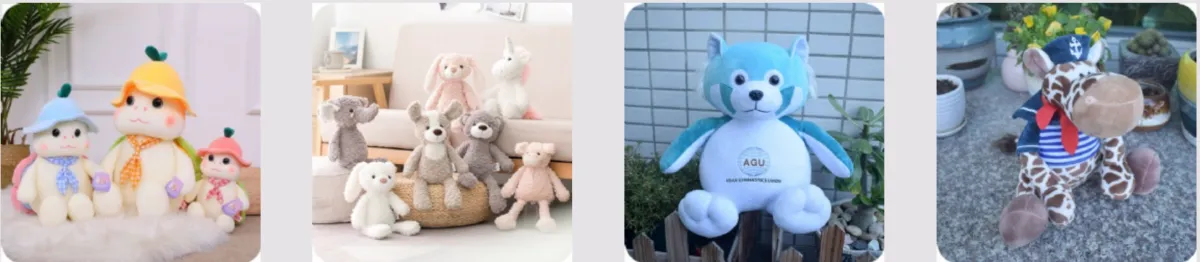
Hengsheng positions itself as a custom plush toy manufacturer in China that has produced plush since 2014. Its about page says it has worked with more than 300 clients, including wholesalers, retailers, movie studios, authors, and non-profit corporations. That customer mix is interesting because it suggests the company may be comfortable with creative and smaller-brand development work.
Why I included it: Hengsheng is a useful example of a supplier that looks relevant for custom work without looking like a giant mass-market plush exporter. The product pages also include safety-standard language referencing EN71, ASTM F963, CPSIA/HR4040, and ISO8124 on at least some plush products, which is helpful even though buyers should never treat a product-page statement as a full compliance substitute.
What I would verify before ordering: actual sample lead time, the degree of in-house QC, production capacity for repeat orders, and whether the broader side categories on the site mean plush is the company’s core operational strength or one part of a wider merchandise business.
4. Shenzhen Jiaoyang Industrial Co., Ltd.
Jiaoyang looks stronger than many smaller plush websites if the goal is to find a supplier with retail/export-style signals. Its company profile says the group was established in 2013, is headquartered in Hong Kong, has independent R&D and design capabilities, and uses ISO9001-standard production management. The home page also uses the phrase “20+ Years Disney Audit Plush Toys & Dolls,” and the company profile shows customer references including Walmart, Hasbro, Woolworths, Hugfun, Prima Toys, and Toys“R”Us.
Why I included it: not every buyer wants a boutique custom-plush shop. Some want a supplier that looks comfortable in larger export-facing programs and broader retail categories like baby plush, pet plush, backpacks, slippers, and throw pillows. Jiaoyang fits that type of sourcing logic better than many niche custom pages do.
What I would verify before ordering: whether the cited customer references reflect current active business, which exact categories are strongest in-house, and whether the factory handling your order is the same one shown in the profile/factory-tour materials.
5. Yortoob

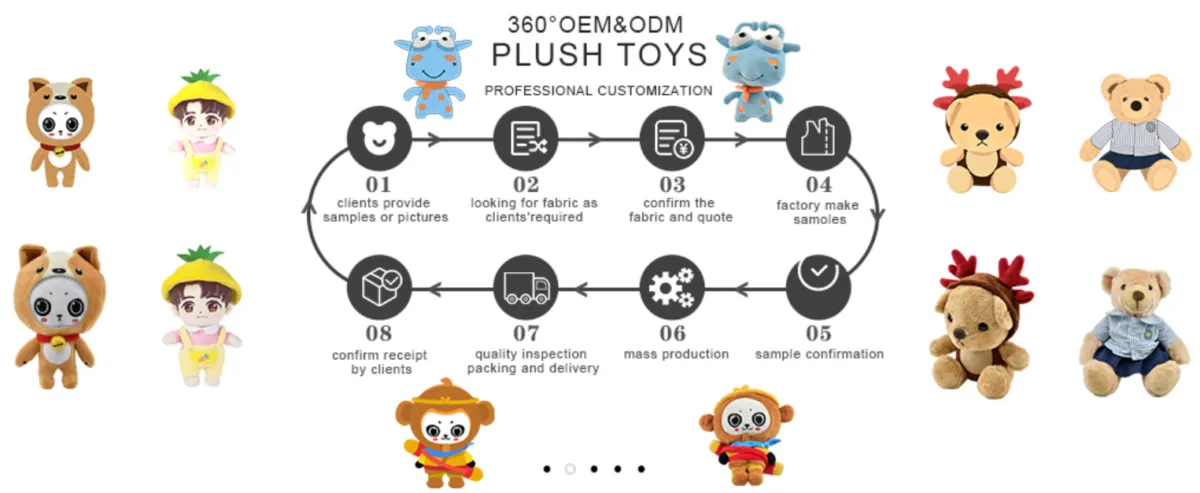
Yortoob is useful because it represents the Yangzhou plush ecosystem, which is an important sourcing cluster in China. Its site says it is a leading custom plush manufacturer with more than 13 years of experience, 12,000+ square meters of factory space, 200+ employees, and one-stop capabilities covering design, printing, weaving, sewing, and packaging. The site also says MOQ starts at 200 pieces.
Why I included it: that MOQ signal makes Yortoob one of the more flexible entries in this group from a public-facing standpoint. The company also positions itself around custom plush keychains, gifts, IP merchandise, and pet products, which makes it more useful for merchandising-led programs than for buyers who only want classic nursery plush.
What I would verify before ordering: how the MOQ changes once size, embroidery density, accessories, and custom packaging are added, and whether the low MOQ applies equally across fully original designs or mainly to simpler customizations.
JianChuang is one of the clearest “premium custom plush” candidates in this list. The company says it has specialized expertise since 2018, is ISO 9001:2015 certified, and provides turnkey manufacturing and bespoke prototyping for premium custom plushies, cotton dolls, mascots, and bags. Its mascot page and country pages also show MOQ 300 pieces.
Why I included it: the website language feels closer to development-led plush manufacturing than to a generic supplier catalog. It repeatedly emphasizes prototype-to-bulk workflow, premium execution, and safety-compliant production. That makes it particularly relevant for buyers doing anime plush, cotton dolls, mascot plush, or plush where shape accuracy and finishing matter.
What I would verify before ordering: how premium the pricing becomes once fabric complexity and accessories increase, whether the ISO-certified factory producing mascots is the same team handling smaller custom plush programs, and what quality-control checkpoints exist between sample approval and bulk shipment.
7. Shenzhen Mange Toy Co., Ltd.
Mange Toy is more specialized than many traditional plush suppliers because it openly focuses on OEM plush toys, K-pop plush, plush keychains, plush dolls, pillows, backpacks, and hats. Its site says the company was established in 2015.
Why I included it: if a buyer is sourcing fan merchandise, idol dolls, plush pendants, or small accessory-heavy plush products, that specialization matters. This is not the same sourcing logic as buying large stuffed animals for nursery retail. The company also uses compliance language referencing EN71, ASTM, CPSC, ICTI, ISO, and BSCI-related standards, although those claims should still be checked against actual reports for the final SKU.
What I would verify before ordering: production repeatability on small plush faces and embroidery details, real export experience in fan-merch categories, and whether accessories such as chains, clips, packaging cards, or mixed trims are tested as part of the final item rather than treated separately.
8. Miyan Toys
Miyan Toys presents itself as a plush toy manufacturer specializing in OEM plush toys, pillows, mascots, promotional stuffed toys, and gifts. Its site states MOQ starts at 1,000 pieces per model and says customers can submit ideas, artwork, or photos for prototype development.
Why I included it: Miyan is practical for buyers who already have a fairly clear product direction and can work with a 1,000-piece starting point. It may not be the first place I would go for very small pilot runs, but it looks relevant for standard OEM plush, mascot work, and promotion-oriented orders. The customization case page also says products align with ASTM standards and offers visible examples of artwork-to-physical conversion.
What I would verify before ordering: how much sample-engineering support is included before tooling or production, whether the company’s stronger lane is mascots versus standard plush, and whether the ASTM language is backed by current lab reports for the exact toy category and age grade.
9. Dongguan Jolly Toy Co., Ltd.

Jolly Toy is one of the broader commercial suppliers in this group. Its public materials show a wide category range including plush toys, plush keychains, baby soft toys, blankets, backpacks, and even roto vinyl dolls. The plush-related pages also show MOQ 500 on at least one product page and position the company around bulk manufacturing and custom-tailored production.
Why I included it: Jolly Toy looks useful when a buyer needs more than one plush SKU or wants adjacent soft-goods categories in the same sourcing relationship. The site also makes public claims tied to BSCI, SMETA, ICTI, Disney, Walmart, and Universal qualification, which is stronger commercial language than many smaller sites provide.
What I would verify before ordering: which categories are truly strongest in-house, whether the same quality system covers plush and non-plush items equally well, and how final AQL or shipment inspection is handled when multiple product types ship together.
How to tell a real OEM plush factory from a trader in China
This is one of the most important parts of the whole article. In China, many suppliers can show nice product photos. That does not automatically mean they are the right OEM plush partner.
When I want to separate a real factory-style plush supplier from a lighter trading or catalog seller, I look for five things.
First, I look for development language, not just sales language. Real plush factories usually talk about design review, pattern making, sample revision, fabric selection, embroidery, stuffing, QC, packaging, and shipment workflow. Nianbeast, JianChuang, and Sukeauto all show that kind of language more clearly than a generic catalog page does.
Second, I look for operational specificity. Public signals like factory area, employee count, MOQ range, machinery, or workshop categories do not guarantee quality, but they do make the supplier profile more credible. Yortoob, Sukeauto, and Jolly Toy all provide more operational detail than many lightweight sourcing pages do.
Third, I look for process structure. A supplier that explains inquiry → design optimization → sampling → bulk production → testing → packaging → shipment usually understands how custom plush projects actually move. Nianbeast’s site is one of the clearest examples.
Fourth, I look for project fit evidence. A real partner for mascot plush should show mascot work. A partner for K-pop dolls should show small doll or keychain work. A partner for retail baby plush should show that category publicly. This sounds simple, but many buyers skip it and then wonder why their development goes poorly.
Fifth, I look for verifiable compliance language, but I do not stop there. Website badges and claims are only a starting point. For U.S. children’s toys, CPSC says toys intended for children 12 and under must be third-party tested and certified in a Children’s Product Certificate, and products for children under 3 must also meet the small-parts ban under 16 C.F.R. part 1501 where applicable. In other words, the right question is not “Does the website say ASTM or CPSIA?” but “Can the supplier provide current, product-specific evidence for my order?”
What buyers should verify before ordering from China
Before I place an order with any plush toy manufacturer in China, I would verify these points.
I would confirm who is actually producing the order. Some companies have multiple sites, partner factories, or mixed sourcing models. That is not automatically bad, but buyers should know where their order will really be made.
I would confirm MOQ by real design condition, not just the homepage number. A plush keychain, a 40 cm mascot, and a layered embroidery doll are not the same manufacturing problem. Public MOQ signals range from 200 pieces at Yortoob to 300 at JianChuang, 500 at Sukeauto and some Jolly pages, and 1,000 at Miyan, but the true MOQ can still move depending on complexity.
I would confirm sample workflow and revision limits. If a factory cannot clearly explain how they handle sample revisions, embroidery corrections, accessory changes, and approval sign-off, the production stage usually becomes painful. Nianbeast and JianChuang both publicly show stronger process awareness here.
I would confirm final packaging support. Buyers often focus too much on the plush itself and too little on hangtags, polybags, gift boxes, display boxes, warning labels, barcode placement, and carton marks. Several of the suppliers above discuss packaging, which is a good sign because packaging mistakes can delay shipment just as badly as product mistakes.
I would confirm inspection and test-report timing. For children’s plush, a website claim is not enough. Buyers should know whether testing will be done on materials, on finished goods, or both, and whether inspection happens pre-production, during production, or pre-shipment.
Compliance and export questions buyers should not skip
For U.S.-bound children’s plush, compliance is not optional. CPSC states that toys intended for children 12 and under must be third-party tested and certified in a Children’s Product Certificate, and it separately emphasizes the small-parts ban for products intended for children under 3. That is why trims, eyes, zippers, clips, and other attachments matter so much on plush.
For EU-bound plush, the regulatory framework is also serious. The European Commission states that toys sold in the EU must meet strict safety requirements, especially around chemicals and physical safety. The same Commission notes that the old Toy Safety Directive is being replaced by the new Toy Safety Regulation, with transition toward the new framework and a future Digital Product Passport requirement. That matters because buyers should think not only about current EN 71-related testing but also about longer-term compliance documentation.
In practical sourcing terms, that means I would ask every shortlisted supplier for three things: recent test evidence for the intended market, a clear age-grade assumption for the product, and confirmation that all attached accessories and packaging warnings are being evaluated as part of the final product concept.
China suppliers by project type
If I were sourcing custom mascot plush or branded character plush, I would start with Sukeauto, Nianbeast, JianChuang, and Miyan. Those companies show the strongest mascot or custom-development signals on the pages I reviewed.
If I wanted plush keychains, K-pop dolls, fan merchandise, or pendant plush, I would look first at Shenzhen Mange Toy, Nianbeast, Yortoob, and Jolly Toy.
If I needed a supplier with stronger retail/export-facing signals, I would pay more attention to Jiaoyang and Jolly Toy.
If lower public MOQ mattered, the most visible signals here come from Yortoob at 200, JianChuang at 300, and Sukeauto and some Jolly pages at 500.
China suppliers vs other sourcing options
China still remains one of the most practical places to source plush toys if a buyer needs development depth, accessory flexibility, packaging coordination, and broad OEM capacity. The strength is not just cost. The strength is the manufacturing ecosystem: fabrics, embroidery, accessories, labels, packaging, sampling, and export support can often be coordinated more efficiently than in smaller plush markets. That ecosystem effect is visible in how many Chinese suppliers openly discuss one-stop development, prototyping, and packaging rather than only offering finished catalog products.
That said, “China” is not enough by itself. A buyer still has to choose the right type of Chinese supplier. A plush merchandise specialist is not the same as a premium mascot maker. A broad export supplier is not the same as a low-MOQ custom plush workshop. This is exactly why project matching matters more than generic top-10 lists.
Conclusion
If I had to summarize the Chinese plush sourcing market in one sentence, I would say this: China is not hard because it lacks factories; it is hard because there are many different kinds of suppliers, and buyers often mix them together.
That is why I would not choose a plush toy manufacturer in China based only on a nice homepage or a cheap quote. I would shortlist by project type, sample capability, packaging support, compliance readiness, and how clearly the supplier explains its actual production workflow.
From the companies reviewed here, Sukeauto, Nianbeast, JianChuang, and Jolly Toy look strongest for buyers who want more complete OEM/ODM support. Mange Toy, Yortoob, and Miyan make more sense for merchandise-led, mascot-led, or simpler custom plush programs. Jiaoyang is especially worth watching if retail/export-style signals matter to you.
If you want, I can next turn this into your full publish-ready format with SEO title, meta description, snippet paragraph, and a more conversion-focused CTA block.
Bring Your Plush Character Vision to Life
Have a specific mascot in mind or want to create your own branded plush line? Our expert team will customize every detail—from fabric selection to embroidered features—to match your exact requirements.
 Free prototype with your custom design
Low MOQ starting from 500 pieces
Complete OEM/ODM support
FAQ: Real Buyer Questions About Chinese Plush Toy Manufacturers
1. Who is actually good at custom plush manufacturing in China, not just listing products?
Not every Chinese supplier with plush photos is a true custom-development partner. The stronger options are usually the ones that publicly show OEM/ODM workflow, prototyping, sample revision, packaging support, and factory details rather than only finished product galleries. Based on the supplier signals reviewed, Sukeauto, Dongguan Nianbeast, JianChuang, and Dongguan Jolly Toy look stronger for buyers who want custom OEM development instead of simple catalog sourcing. Sukeauto publicly presents itself as a custom plush factory with OEM/ODM service, three production sites, and MOQ from 500 pieces, while Nianbeast emphasizes 33 years of plush manufacturing plus design review, sampling, testing, and eco-friendly packaging.
2. How do I know if a Chinese plush supplier is a real factory or just a trading company?
I would look for five practical signals: factory-specific details, a visible sample-development process, realistic MOQ language, category specialization, and product-specific compliance awareness. A real factory-style supplier usually explains how artwork becomes a sample, how revisions are handled, what production steps are done, and what packaging or testing support is available. For example, Nianbeast publicly shows a step-by-step inquiry-to-sampling-to-production process, and Sukeauto provides factory scale, machinery, and MOQ details. That kind of specificity is usually more useful than generic “high quality supplier” language.
3. Which Chinese plush factories are best for mascot plush, branded plush, or promotional projects?
For mascot plush and branded character work, I would prioritize suppliers that already talk about OEM/ODM customization, artwork-based development, and packaging support. Sukeauto is a strong fit if the project is brand-led and needs a more complete factory workflow, while Nianbeast looks especially strong for mascot, souvenir, and custom plush programs with more hands-on development support. If the project is more merchandise-driven, especially for smaller character items or gift-style plush, Yortoob is also worth watching because it positions itself around custom plush, gifts, and OEM/ODM production.
4. Can Chinese plush manufacturers make plush keychains, pendants, or collectible-style plush?
Yes, and this is one of the areas where supplier type matters a lot. Not every plush supplier is equally strong in smaller, accessory-heavy items. If the project is closer to plush keychains, pendants, bag charms, or collectible-style merchandise, I would look more closely at suppliers whose public positioning already reflects that kind of work. Yortoob explicitly mentions custom plush keychains, and Nianbeast shows plush-specialist OEM/ODM capability with customization and product categories beyond standard stuffed animals.
5. What MOQ should I expect when working with a Chinese plush toy manufacturer?
MOQ depends heavily on the design. Publicly visible numbers already show that Chinese plush suppliers are not all operating at the same threshold. Sukeauto says MOQ starts at 500 pieces, while Yortoob presents itself as an OEM/ODM plush manufacturer and is commonly surfaced with lower-MOQ custom positioning. In practice, the true MOQ usually changes with plush size, embroidery complexity, accessories, packaging, and whether the product is a simple plush doll, a mascot, or a keychain-style item. That is why buyers should not rely on a homepage MOQ alone; they should ask for MOQ by exact design condition.
6. What should I ask a China plush supplier before paying for samples or production?
I would ask who is actually making the order, what the MOQ is for my exact design, how many sample revisions are included, whether packaging can be handled in-house, and what testing or inspection support is available for the target market. This matters because toy compliance is product-specific. In the U.S., toys intended for children 12 and under must be third-party tested and certified in a Children’s Product Certificate, and small-parts/choking-hazard rules can also apply depending on the design and age grading. So the right question is not “Do you have ASTM?” but “Can you support the exact compliance documents for my finished plush SKU?”
7. Which Chinese plush manufacturers are better for startups or smaller brands?
For startups, I would look for three things: lower public MOQ, willingness to support sampling from artwork, and a supplier profile that feels development-friendly rather than only enterprise-focused. Yortoob is attractive because it is publicly positioned around custom plush and appears more flexible for smaller custom projects. Sukeauto can also make sense for startups that want a more structured OEM partner and can meet its published MOQ level, especially if the project needs stronger packaging, branding, and compliance coordination. The right choice depends on whether the startup is optimizing for minimum entry quantity or for a more complete factory workflow.